
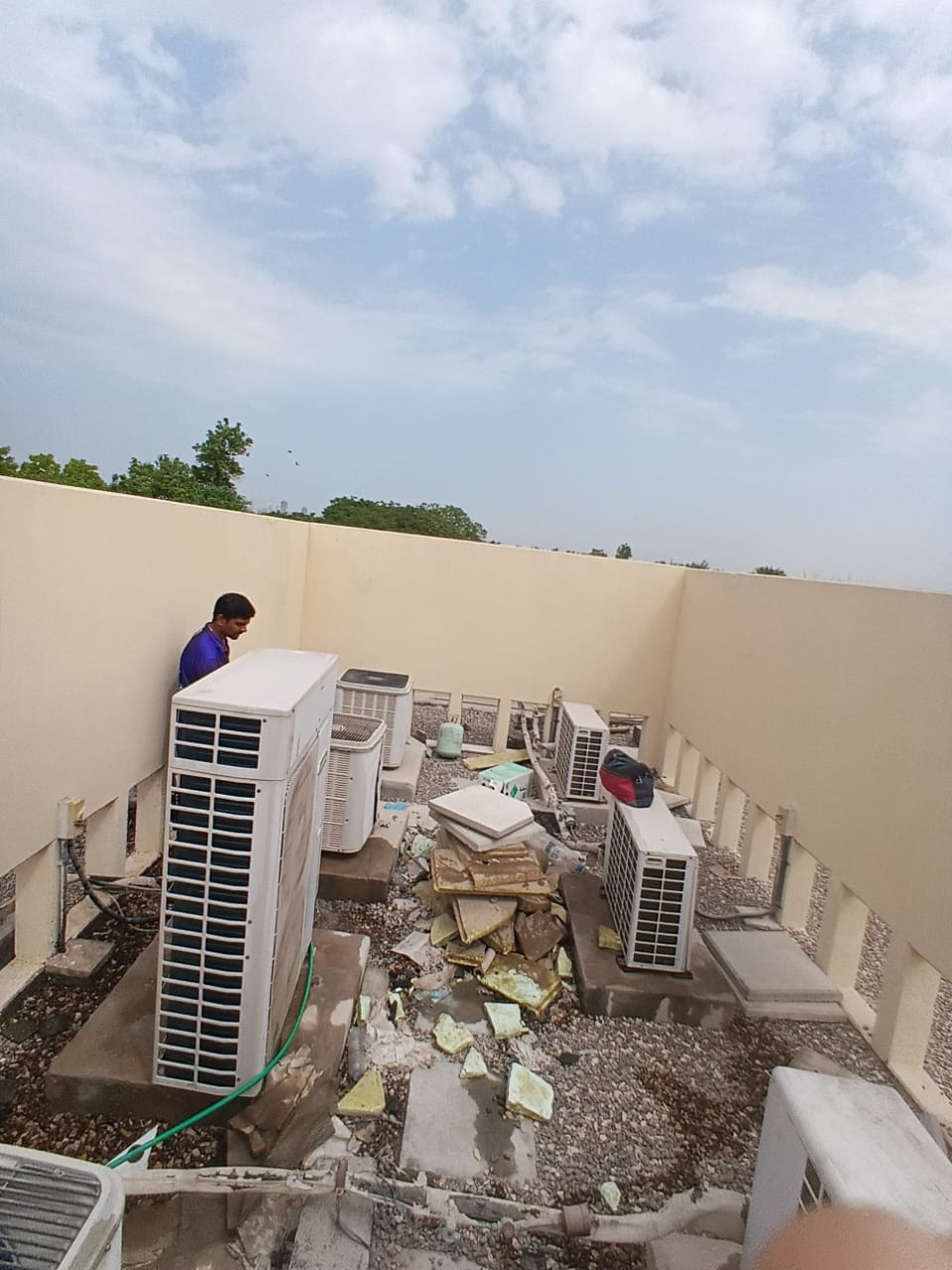
In Dubai, air conditioning isn’t a luxury—it’s the difference between living comfortably and simply enduring the summer. With temperatures routinely climbing into the low 40s Celsius and humidity pushing the “feels like” temperature even higher, your AC system runs for the vast majority of the year. That constant operation, combined with the dust and sand that define the local environment, means maintenance isn’t optional. Here’s what you need to know about keeping your cooling system healthy, efficient, and ready for the worst the climate throws at it.
Why Regular AC Maintenance Is Non-Negotiable in Dubai
The numbers tell a straightforward story. During July and August, average daytime highs in Dubai sit around 41°C, and overnight temperatures rarely drop below the low 30s . Humidity along the coast can make it feel several degrees hotter than the actual reading . Your AC is working against that heat load every single hour.
The local environment compounds the challenge. Dust and sand accumulate inside units quickly, coating evaporator and condenser coils and obstructing airflow. According to service providers operating in the market, a unit running 18 hours a day can build up enough dust in three months to reduce cooling capacity by around 30%—meaning you’re paying full price on your DEWA bill for a fraction of the comfort .
The Dubai Electricity & Water Authority (DEWA) is direct about the consequences: clogged or dirty filters block normal airflow and reduce system efficiency significantly. DEWA recommends cleaning AC filters at least once a month during summer . Clogged drain lines present a separate hazard. In Dubai’s humidity, condensate build-up is constant, and a blocked drain can lead to water overflow, ceiling damage, and mold growth—problems that a two-minute flush during routine maintenance could prevent .
What AC Services Actually Cover
A reputable AC service in Dubai goes far beyond a quick filter wipe. The scope typically includes deep cleaning of evaporator and condenser coils using chemical agents, refrigerant pressure checks and top-ups, drain line flushing, electrical connection inspections, thermostat calibration, and performance testing .
Service providers distinguish between routine cleaning and deep coil cleaning. Routine cleaning typically involves filter washing, drain flushing, and basic checks. Deep coil cleaning requires chemical application and rinsing to restore heat exchange efficiency—a task that providers say should be handled by trained technicians with the right tools and cleaning agents . For ducted systems and villas with multiple zones, duct inspection and cleaning add another layer of service that many homeowners schedule annually .
Emergency repair is the other critical piece. When an AC fails in July at 2 AM, response time matters enormously. Some providers now offer 24/7 emergency callouts with response windows measured in hours rather than days . One documented case involved a failed capacitor that a technician replaced on-site for AED 350, versus another company’s phone quote of AED 3,200 for a compressor replacement—without even inspecting the unit .
Pricing: What You Should Expect to Pay
AC service pricing in Dubai varies based on unit count, system type, and whether you’re paying per service or signing an annual contract. For a one-off deep clean, expect to pay in the range of AED 199 to AED 350 per split unit, often including gas top-up and a service warranty . Routine cleaning alone typically runs lower, with market estimates around AED 100–300 per unit .
Annual maintenance contracts (AMCs) change the math considerably. A starter package covering 2–3 units generally falls between AED 600 and AED 1,200 per year. For a standard villa with 4–6 units, expect AED 1,200–2,400 annually. Larger properties with 7 or more units, or those with VRF and central systems, range from AED 2,400 to AED 6,000 per year . These contracts typically include quarterly servicing, gas top-ups, and emergency callouts, with some providers offering extra summer visits during peak months.
The case for an AMC is straightforward when you consider the alternative. A slow refrigerant leak that goes undetected can overheat and destroy a compressor—a repair costing AED 2,000 to AED 5,000, compared to AED 150–300 for a gas top-up . One provider reports that a client’s DEWA bill dropped by AED 340 in the first month after a deep clean, effectively making the AED 199 service cost-neutral within weeks .
How to Choose a Provider
DEWA registration is a useful starting point for filtering providers. Companies that employ DEWA-registered technicians operate within a regulatory framework and typically maintain higher standards than freelance operators . Beyond that, ask about the specifics: how long does a technician spend per unit? What’s included in the quoted price? Is gas top-up part of the service or an add-on? Is there a service warranty?
The distinction matters. A 15-minute “cleaning” that only wipes filters is not the same as a 45–60 minute deep service that chemically cleans coils, flushes drains, checks refrigerant pressure, and tests electrical connections . Providers that include gas top-up in their base price offer a tangible advantage, as refrigerant top-ups charged separately can add AED 150–300 per unit per visit.
For commercial properties and apartment buildings, bulk rates and property management contracts are common. One documented project serviced 45 split units across 15 apartments at AED 149 per unit, reducing monthly AC complaint tickets from 12 to 1 .
The Bottom Line
Dubai’s climate doesn’t offer your AC system any favours. The combination of extreme heat, constant operation, and airborne dust creates a maintenance burden that’s real and unavoidable. The choice isn’t whether to invest in AC services—it’s whether you do it preventively on your terms, or reactively when the system fails on a 43°C afternoon in August.
For most residents, an annual maintenance contract covering quarterly servicing and emergency response represents the most practical balance of cost and peace of mind. The alternative—waiting for breakdowns, paying emergency premiums, and absorbing the higher DEWA bills that come with neglected systems—costs more in both money and comfort. In a city built on air conditioning, keeping that system healthy is simply part of living here.
