
Installing an air conditioner in Dubai is not a luxury—it is a necessity. With temperatures that regularly exceed 40°C and humidity that can make the heat feel even more oppressive, a properly installed AC system is essential for comfortable living and working. However, AC installation in Dubai involves more than simply buying a unit and mounting it on the wall. From choosing the right system size to navigating DEWA regulations and obtaining community. NOCs, there are several factors that determine both the cost and the success of your installation.
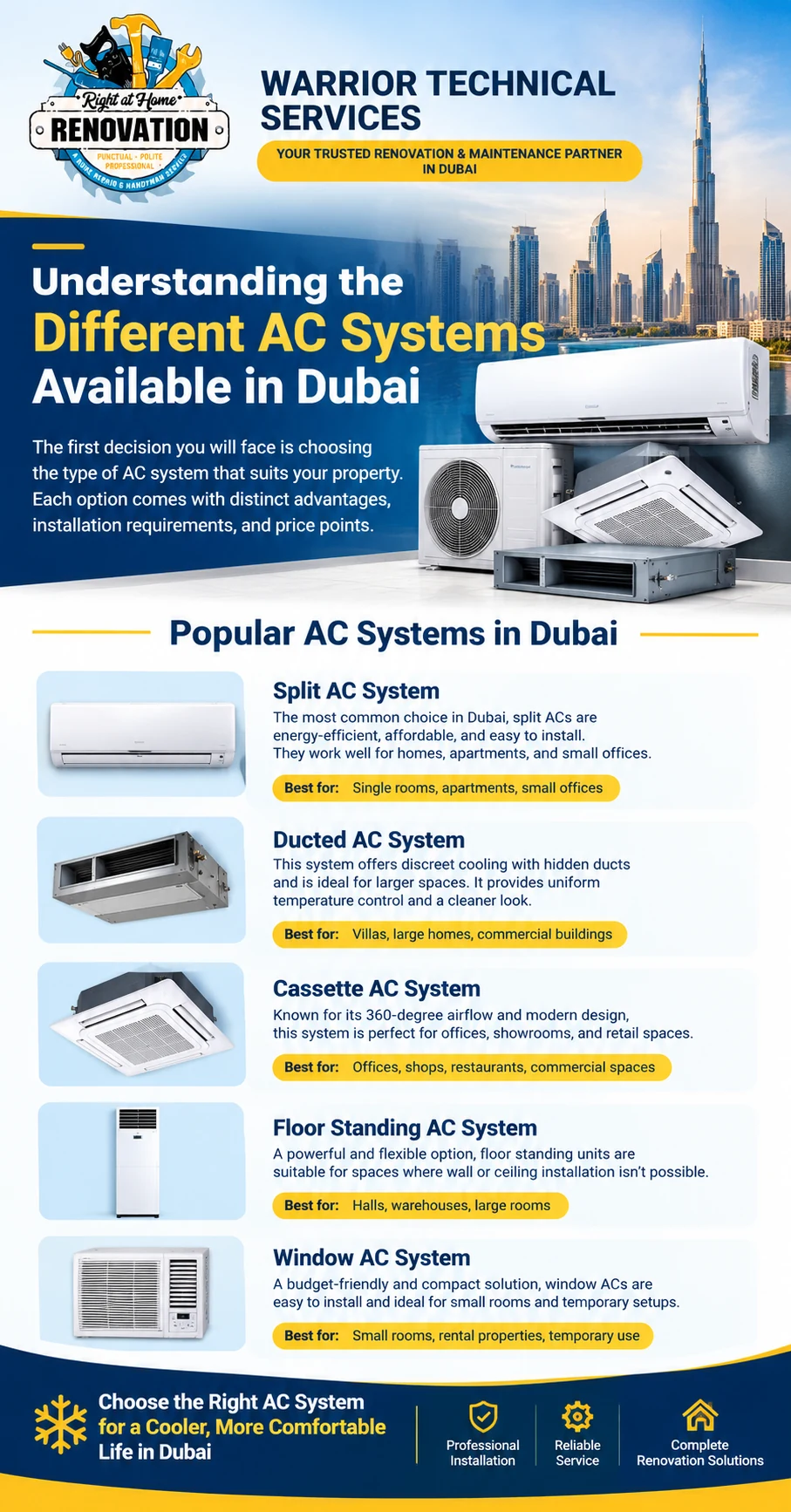
Understanding the Different AC Systems Available in Dubai
The first decision you will face is choosing the type of AC system that suits your property. Each option comes with distinct advantages, installation requirements, and price points.
Split AC units are the most common choice for apartments and individual rooms. A split system consists of an indoor wall-mounted unit connected to an outdoor compressor via refrigerant piping. These units are relatively affordable and work well for spaces up to approximately 60 square meters. For a standard 1-ton unit suitable for a small bedroom, installed costs typically range from AED 1,800 to AED 3,500. A 1.5-ton unit for a living room runs between AED 2,500 and AED 4,500, while a 2-ton unit for a large room or open-plan space can cost AED 3,500 to AED 6,000 installed.
Ducted or central AC systems are standard in most villas across communities like Arabian Ranches, Dubai Hills Estate, and Jumeirah Park. These systems push cooled air through ductwork concealed in the ceiling, with supply and return grilles in each room. Ducted systems offer cleaner aesthetics and more even cooling, but the installation cost is significantly higher. A 3-ton ducted unit for a small villa typically costs between AED 8,000 and AED 15,000, while a 5-ton unit for a medium villa ranges from AED 14,000 to AED 25,000. s and luxury villas. These systems allow for precise temperature control across multiple zones and are highly energy-efficient. Installation costs for VRF systems generally start around AED 40,000 and can exceed AED 150,000 depending on the number of zones and complexity.
Cassette and ceiling-mounted units are often found in shops, restaurants, and open-plan offices. These units are recessed into the ceiling and distribute air in multiple directions. Installation requires adequate ceiling void space—typically a minimum of 300mm—and costs range from AED 4,000 to AED 8,000 per unit installed.
How Much Does AC Installation Cost in Dubai?
The cost of AC installation in Dubai varies widely based on several factors: the type of system, the size and capacity of the unit, the brand, energy efficiency ratings, and additional features such as smart thermostats or air purification.
For basic installation labor, many service providers charge a callout fee starting at AED 150, which includes the first hour of work. Additional hours are typically billed at AED 150 per hour. However, this labor-only pricing does not include the cost of the AC unit itself or materials such as copper piping, drainage lines, and mounting supports.
When purchasing a complete supply-and-install package, a wall or cassette split system typically ranges from AED 3,500 to AED 9,000, including the unit, pipework, condenser, and commissioning. The spread in price depends primarily on tonnage, brand, and how far the condenser sits from the indoor unit. For FCU (Fan Coil Unit) replacements in apartments, costs range from AED 2,800 to AED 6,500 per unit.
Several factors can push a quotation higher. A long refrigerant or duct run, a condenser position that requires crane or rope access, chasing concrete rather than running through a ceiling void, and any scope that triggers Civil Defence or building management resubmission will all increase costs. Conversely, keeping the plant where it already is and coordinating the HVAC work with ceiling work can help reduce expenses.
To ensure you receive a fair price, obtain quotes from multiple reputable HVAC companies. Compare not just the headline price but the full scope of work, including materials, labor, and any required permits.
Permits and Regulations: What You Need to Know
AC installation in Dubai is not simply a matter of hiring a technician and getting the job done. There are regulatory requirements that must be met.
For new electrical connections to AC units, a DEWA (Dubai Electricity and Water Authority) NOC is required. This ensures that the electrical work meets safety standards and that the additional load on your building’s electrical system is properly accounted for. DEWA mechanical clearance is also required for HVAC installations, particularly for larger systems.
If your installation involves any structural modifications—such as cutting into walls for ductwork or relocating outdoor units—you will need approval from Dubai Municipality. For villa expansions or installations in master-planned communities, a developer NOC from the master developer (such as Emaar or Nakheel) is mandatory before any work begins.
Reputable AC installation companies will handle these approvals as part of their service. When vetting contractors, verify that they hold current DEWA certifications for electrical work and refrigerant handling, a valid Dubai trade license, and public liability insurance. They should also be able to provide a written scope documenting all installation components and a commissioning report format before work begins.
The Installation Process: What to Expect
A professional AC installation in Dubai follows a structured process designed to ensure optimal performance and longevity.
Site assessment and cooling load calculation are the first steps. Rather than defaulting to rule-of-thumb sizing based on room area alone, a qualified installer will assess your property’s characteristics—square footage, ceiling height, insulation, window orientation, glazing type, and occupancy patterns—to determine the proper equipment capacity for each zone.
Installation planning covers indoor unit placement (considering aesthetics, airflow, and service access), outdoor condenser location (ensuring adequate airflow and protection), refrigerant piping routing, electrical requirements, and drainage routing.
During execution, DEWA-certified technicians mount the indoor unit with proper vibration isolation, place the outdoor unit with clearance verification, install refrigerant piping with correct sizing and insulation, complete electrical connections with safety testing, and install drainage with proper fall.
Commissioning and testing is a critical step that distinguishes proper installation from shortcuts. Post-installation testing should verify cooling performance across all zones with measured delta-T, refrigerant charge accuracy using calibrated pressure gauges, electrical safety with insulation resistance testing, and drainage functionality under simulation. Documentation recording all test results provides a baseline for future comparison.
For a standard split unit in an apartment, installation typically takes one day. Villas or multi-unit installations require two to three days for completion and testing. Complex office projects involving ductwork integration can extend to a week.
Maintaining Your AC After Installation
Once your AC is installed, regular maintenance is essential to keep it running efficiently in Dubai’s demanding climate. AC systems in Dubai often run almost year-round, which accelerates wear on components. Dust, sand, and debris are constant challenges that can clog filters and coils, reducing efficiency and increasing energy bills.
Industry professionals recommend servicing your AC at least once every six months, though quarterly servicing is advisable for systems under heavy use. Pre-summer maintenance is particularly important—before the scorching summer heat sets in, a full system test can identify issues before peak use begins.
Key maintenance tasks include cleaning or replacing air filters, checking and sealing air duct leaks, cleaning the evaporator and condenser coils, clearing the drain line to prevent mold and water damage, and inspecting electrical components and wiring.
An Annual Maintenance Contract (AMC) is a popular option in Dubai that provides predictable costs and priority service. AMC packages typically range from AED 600 to AED 1,200 per year for apartments with two to three units, up to AED 2,400 to AED 6,000 for large villas with seven or more units. These packages generally include quarterly servicing, filter cleaning, coil cleaning, gas pressure checks, and emergency callout coverage.
Choosing the Right Installer
The quality of your AC installation has a direct impact on how well your system performs for years to come. When evaluating contractors, consider the following factors:
- Credentials and licensing: Verify DEWA certifications, a valid Dubai trade license, and manufacturer authorizations for the equipment you plan to install.
- Experience with your system type: Not every installer handles all three system types (split, ducted, and VRF). Confirm capability with your chosen system before committing.
- Documentation practices: A professional installer will perform documented cooling load calculations and provide a commissioning report with measured performance data.
- Warranty terms: Understand what is covered by both the equipment warranty and the installation warranty. Reputable companies offer at least one year on labor.
- Reviews and references: Look for reviews from similar property installations rather than generic positive feedback. Ask for references from recent projects comparable to yours.
Conclusion
AC installation in Dubai is a significant investment, but one that is indispensable for comfortable living. By understanding the different system types, realistic cost expectations, regulatory requirements, and the importance of professional installation and ongoing maintenance, you can make informed decisions that ensure efficient, reliable cooling for years to come. Whether you are installing a single split unit in an apartment or specifying a full VRF system for a villa, prioritizing quality installation and regular maintenance will protect your investment and keep you comfortable through Dubai’s challenging climate.
