
In Dubai, air conditioning is not a luxury—it is the backbone of daily life. With summer temperatures regularly soaring past 45°C and humidity levels that can make the air feel thick and heavy, a functioning AC system is the difference between comfort and misery. Yet, installing an AC in Dubai is not as simple as mounting a unit on the wall and plugging it in. The city’s brutal climate, strict DEWA regulations, and unique building codes mean that a poorly executed installation can lead to soaring electricity bills, water damage, and a system that fails long before its time.
Whether you are moving into a new apartment, upgrading a villa, or replacing an aging unit, getting the installation right the first time is critical. This guide covers everything you need to know about AC installation in Dubai, from choosing the right system and understanding costs to navigating regulations and ensuring long-term performance.
Why Professional Installation Matters in Dubai’s Climate
Dubai’s environment is uniquely punishing for cooling equipment. A system that works perfectly in a milder climate can struggle within months if installed incorrectly. Professional installation is not just about convenience—it directly affects your energy consumption and the lifespan of your unit.
The stakes are high: Approximately 70% of a typical Dubai household’s DEWA bill comes from AC usage. An improperly installed unit can lose up to 30% of its rated cooling capacity within the first season. This means you are paying more for less comfort, and the compressor is working harder than it should, leading to premature breakdowns.
Several technical factors make professional installation essential in Dubai:
- Refrigerant lines must be cut, flared, and pressure-tested correctly. A single leak can cause the system to lose cooling capacity within weeks.
- Electrical connections must comply with DEWA standards. Incorrect wiring can trip breakers, damage the compressor, or void your warranty.
- Drainage is critical in Dubai’s humidity. If the condensate line is not pitched properly, water can leak inside walls or ceilings, causing costly structural damage.
- Unit sizing must be calculated based on room volume, insulation, window exposure, and floor level—not guesswork. An undersized unit runs constantly and burns out faster, while an oversized unit short-cycles and leaves the air feeling clammy.
Choosing the Right AC System for Your Property
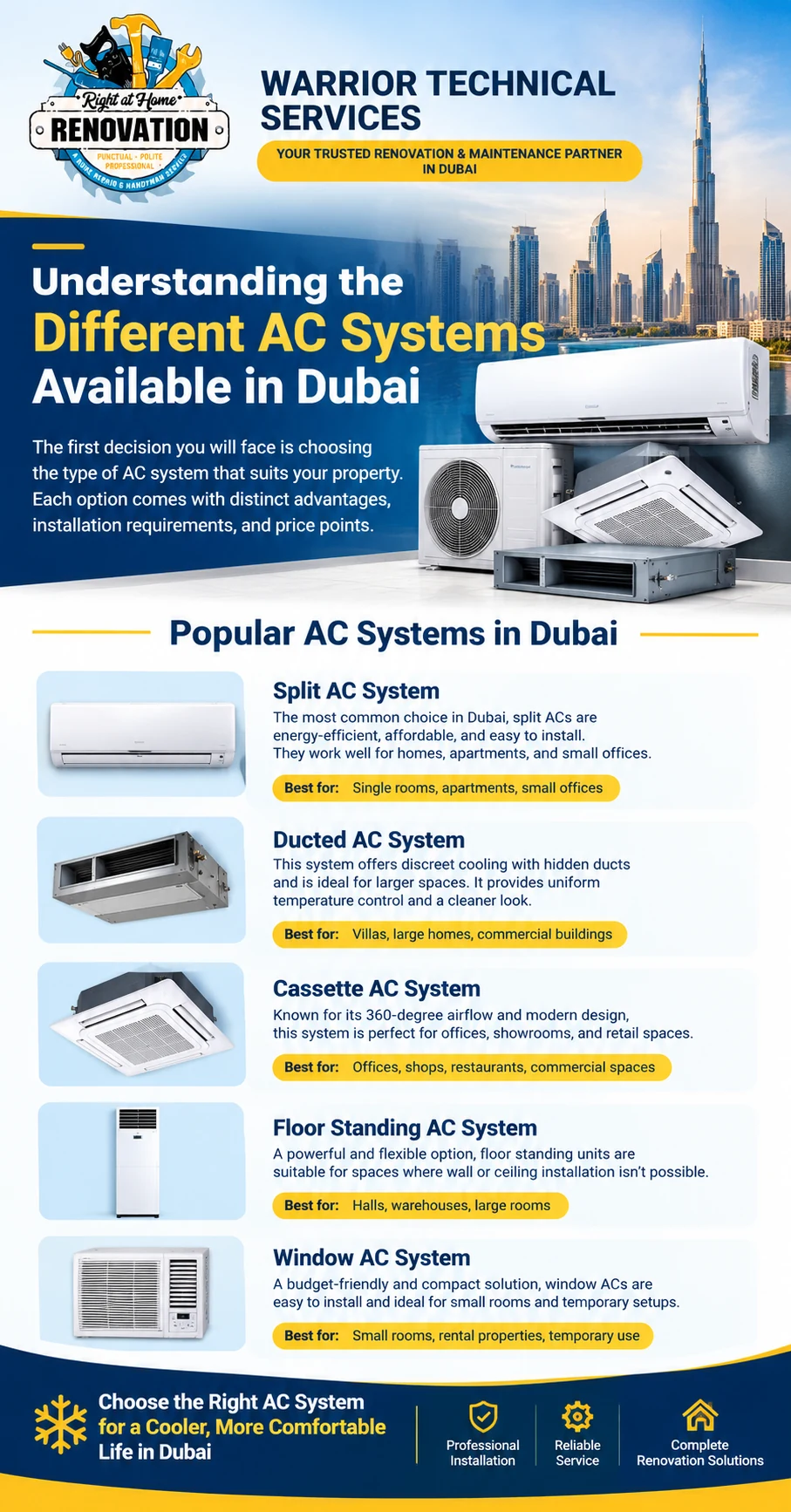
Dubai’s market offers several types of air conditioning systems, each suited to different property types and budgets. Understanding the options is the first step toward a successful installation.
Split AC Systems
Split systems are the most common choice for apartments and individual rooms. Each room has its own indoor wall-mounted unit connected to an outdoor compressor via refrigerant piping. They offer independent temperature control and are relatively affordable. Modern inverter split units are highly efficient for rooms with variable occupancy, as they only cool the spaces in use. However, for a whole apartment, multiple outdoor units may be needed, which can be less aesthetically pleasing.
Best for: Studios, 1- to 3-bedroom apartments, and individual rooms in shared properties.
Central (Ducted) AC Systems
Central systems use a single large cooling unit connected to a network of ducts that distribute conditioned air throughout the property. They provide more uniform cooling and a cleaner aesthetic, as the equipment and ductwork are hidden in the ceiling. Most villas in communities like Arabian Ranches, Dubai Hills Estate, and Jumeirah Park come with ducted central AC as standard. The trade-off is a significantly higher installation cost and more complex maintenance.
Best for: Villas and large apartments where whole-home comfort and aesthetics are priorities.
VRF/VRV Systems
Variable Refrigerant Flow (VRF) systems are the premium option for luxury villas and commercial spaces. They allow multiple indoor units to run from a single outdoor condensing unit, each with individual temperature control. VRF systems are exceptionally energy-efficient—offering up to 50% savings compared to conventional systems—and can even provide simultaneous heating and cooling in different zones. However, they require specialized technicians for installation and maintenance, and the upfront cost is the highest among residential options.
Best for: Luxury villas, multi-zone homes, and commercial offices.
Cassette and Ceiling-Mounted Units
Cassette units sit flush with the ceiling and blow air in four directions, making them a popular choice for shops, restaurants, and open-plan offices. Installation requires adequate ceiling void space—typically at least 300 mm.
Best for: Commercial spaces and open-plan areas where wall space is limited.
The Cost of AC Installation in Dubai
Costs vary widely depending on the system type, property size, and the complexity of the installation. Here is a breakdown of typical price ranges in Dubai:
For a typical 2-bedroom apartment requiring 3 to 4 split units, the total installation cost is usually between AED 6,000 and AED 14,000. It is important to get at least two quotes from DEWA-certified contractors and to confirm that the quoted price includes the unit, materials, labor, and any required approvals.
DEWA Regulations and Approvals: What You Need to Know
Any electrical work in Dubai, including AC installation, must comply with the standards set by the Dubai Electricity and Water Authority (DEWA). A qualified, DEWA-registered contractor should handle this as part of the installation, but homeowners should still understand the key requirements.
Electrical compliance is non-negotiable. Each AC unit requires a dedicated circuit breaker rated for the compressor’s starting current, earth leakage protection on all circuits, and copper piping of the correct diameter for the refrigerant type (R-410A is standard in newer systems, while R-22 is being phased out).
When approval is required: Like-for-like replacement of an AC unit at the same capacity and location does not typically require DEWA approval. However, formal approval is needed for:
- Adding new AC units or increasing the number of power circuits
- Converting from split-unit to ducted systems
- Adding AC to previously uncooled spaces (e.g., garage conversions)
- Switching from district cooling to individual AC
Building and community rules: Many apartment buildings in areas like JBR, Downtown Dubai, and Dubai Marina have designated outdoor unit locations. For villas, you may need a No Objection Certificate (NOC) from your community’s management if you are adding outdoor units or modifying ductwork. Communities such as Emirates Hills, The Lakes, and Al Barsha have specific rules about external equipment visibility.
Contractor licensing: AC installation falls under a technical services license issued by Dubai’s Department of Economy and Tourism (DET), with additional approvals often required from DEWA or Dubai Municipality. An unenrolled contractor cannot legally connect power or obtain sign-off inspections. Always verify that your installer holds the necessary credentials before work begins.
The Installation Process: Step by Step
A professional AC installation in Dubai follows a systematic process. Understanding what to expect helps you hold your contractor accountable and ensures no critical steps are skipped.
Step 1: Site Survey and Heat-Load Calculation
The technician visits your property to measure the space, check the electrical setup, assess insulation and window exposure, and calculate the required cooling load. This is not guesswork—a proper heat-load calculation determines the correct unit capacity and prevents the common mistakes of undersizing or oversizing.
Step 2: Planning the Installation Route
The installer plans where refrigerant lines will run, how drainage will be routed, and the best path to minimize visible piping while maintaining efficiency. In apartments, the outdoor unit must be placed in the designated exterior space, often on a balcony.
Step 3: Preparing Mounting Locations
Indoor units are mounted on structurally sound walls or ceiling brackets, typically at least 2.1 meters from the floor and away from direct sunlight or heat sources. Outdoor units are anchored on level, stable surfaces with anti-vibration mounts to reduce noise transfer.
Step 4: Running Refrigerant Lines and Electrical Connections
Copper refrigerant pipes are routed, insulated, and sealed to prevent condensation and energy loss. The drain line is connected with the correct fall angle to ensure continuous drainage. Electrical connections are made to the correct breaker rating and tested before proceeding.
Step 5: Vacuum Testing
This is the critical step that cheaper installers often skip. The refrigerant circuit is vacuumed to remove all moisture and air before charging. Moisture left in the system can freeze inside the unit or react with refrigerant to form acid, which corrodes internal components over time.
Step 6: Charging and Commissioning
The system is charged with the correct weight of refrigerant, and a full performance test is conducted. The technician verifies cooling output, checks for leaks, confirms drainage works correctly, and tests all controls. A standard split unit installation takes three to five hours; ducted systems can take two to five days depending on complexity.
Common Installation Mistakes to Avoid
Even with a seemingly reputable contractor, certain shortcuts can compromise your system. Be alert to these red flags:
- Skipping the vacuum stage: This is the most damaging shortcut. Moisture in the lines leads to corrosion and compressor failure.
- Connecting the drain to a sewer line without a trap: This allows sewage odors to enter the room through the AC.
- Placing the outdoor unit in an enclosed space: Compressors need ventilation—at least 500mm clearance on all sides. Poor airflow causes overheating and high-pressure faults.
- Using the wrong refrigerant: Mixing R-22 and R-410A can destroy the compressor.
- Insufficient pipe insulation: Uninsulated or poorly insulated lines lose cooling efficiency and cause condensation.
Maintaining Your AC in Dubai’s Climate
Installation is only the beginning. Dubai’s dust and constant use mean that maintenance is not optional—it is essential for efficiency and longevity. DEWA recommends setting your thermostat to 24°C, the optimal balance between comfort and energy efficiency. Each degree higher can meaningfully reduce your bill.
Key maintenance tasks include:
- Cleaning or replacing air filters every 2 to 4 weeks during peak summer. Clogged filters block airflow and significantly reduce efficiency.
- Cleaning outdoor unit coils quarterly to remove dust and sand buildup.
- Checking and clearing the drain line every three months to prevent mold and water damage.
- Scheduling annual professional servicing, including coil cleaning, refrigerant level checks, and thermostat calibration.
For split systems, annual maintenance typically costs AED 100 to AED 300 per unit for basic cleaning. Central systems require more extensive annual service, but neglecting either type will lead to higher energy bills and a shorter equipment lifespan.
Final Thoughts: Get It Right the First Time
A well-installed AC system in Dubai pays for itself in lower DEWA bills, fewer breakdowns, and a lifespan of 10 to 15 years instead of 5 to 7. The temptation to cut corners on installation—whether by choosing the cheapest quote or skipping regulatory approvals—almost always leads to greater costs down the line.
Before you buy, insist on a proper heat-load calculation, verify your contractor’s DEWA credentials, and ensure the installation includes pressure testing, vacuuming, and full commissioning. Your comfort during Dubai’s long, hot summers depends on the quality of the work done on day one.
